

Safety comes before the checklist
Most useful observations can begin from the ground.
Do not climb in rain, snow or ice, lean ladders on eavestrough, work near overhead wires or attempt maintenance without suitable training and equipment. Binoculars, photos from safe positions and observations during rainfall can provide valuable evidence.
Spring: follow thaw and early rain
- Confirm lower elbows and extensions remain connected after snow movement.
- Look for winter deformation, pulled fasteners and open joints.
- Check whether meltwater or rain reaches the intended surface area.
- Watch for overflow that could indicate frozen or compacted debris.
- Record staining that appeared over winter.
Summer: use storms as a performance check
From a safe position, observe how quickly each outlet begins flowing and where overflow occurs. Strong summer rain can reveal valley concentration, long-run capacity and ground-discharge problems that are not obvious in dry conditions. After wind, look for branches or displaced components.
Autumn: manage the actual debris cycle
One calendar date may be too early if nearby trees retain leaves. Watch the dominant species and plan service after the main drop, with an earlier check when outlets repeatedly block. Needles, seeds and roof grit can require different timing from large leaves.
Winter: observe without unsafe intervention
Look for icicles, frozen overflow paths, separated lower extensions and ice forming across occupied surfaces. Ice can be caused by blocked drainage, but roof heat loss and assembly conditions may also contribute. Avoid striking or heating components in ways that damage metal, roofing or create falling hazards.
What to review every season
| Component | Ground-level observation |
|---|---|
| Eavestrough run | Alignment, visible debris, staining, sag or deformation |
| Corners and end caps | Drips, staining or separation |
| Outlets and upper elbows | Delayed flow, local overflow or visible blockage |
| Downspouts | Dents, loose joints and secure fastening |
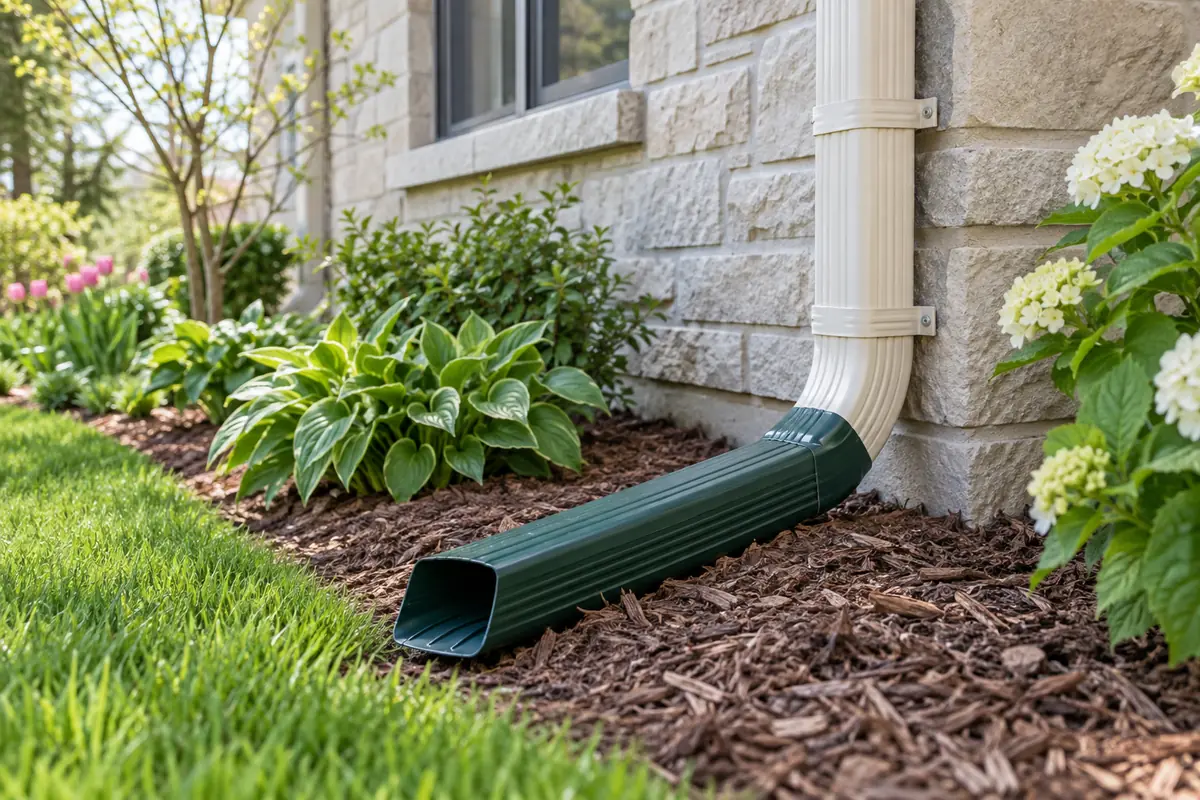
| Lower discharge | Connection, direction, pooling and walkway impact |
Keep a simple property record
Store dated photos by elevation and note cleaning, repairs and observed rain conditions. A short history helps distinguish one storm event from a recurring location. For managed properties, use consistent building and elevation names.
Know when maintenance becomes repair
Request a repair review when a cleared system still leaks, sags or separates. Use the overflow guide when spills continue without visible debris, and the downspout page when the lower route causes pooling or ice.
Create a four-view photo record
For each problem elevation, save one wide roofline view, one close condition, one view of the nearest outlet or upper downspout and one view of the lower discharge area. Repeat those angles after major service or at the next seasonal review. Consistent views make movement and repeat debris easier to recognize.
Adjust the checklist after changes to the property
New roofing, guards, tree removal, an addition, painting, landscaping or a relocated downspout can change what needs attention. Update the property record instead of carrying forward a maintenance schedule designed for an older roof edge.
Escalate symptoms that maintenance cannot resolve
A clear trough that still holds water, a corner that continues to leak, repeated pull-away or a downspout that discharges into an unsuitable area is no longer only a cleaning item. Move the condition to a defined repair, overflow or drainage review and retain the seasonal observations as evidence.
Questions about this service
Are two cleanings a year always enough?
Not always. Debris type, tree cover, guards, roof shape and recurring outlet restrictions should determine the schedule.
Should eavestrough be cleaned in winter?
Winter access can be hazardous and frozen material changes the work. Avoid unsafe intervention and arrange appropriate professional help if an urgent condition exists.
What should I check after a storm?
From the ground, look for overflow, loose or displaced components, branches, separated extensions and new pooling at the discharge point.
Do gutter guards change the schedule?
They can change the type and frequency of service, but surface debris, outlets and the system below still require periodic checks.
Is a ground-level check enough to clean the system?
No. It is a safe way to identify concerns. Actual elevated cleaning or inspection requires appropriate equipment, conditions and training.