You do not need to diagnose the problem before reaching out. Start with the visible symptom, and use the service guide to understand the likely parts of the system involved.
Start with the condition you can observe and the outcome you want.
A leaking corner may belong under repair; a system that is clear but still spills may need the broader overflow and drainage review. A planned exterior renovation may combine new eavestrough with soffit, fascia or capping.
Collection, movement, vertical conveyance and surface discharge all affect the result.
A new trough cannot compensate for a restricted outlet, and a larger downspout does not resolve a poor termination point. Roof shape, valleys, slope, outlets, downspout count and the ground route should be considered together.
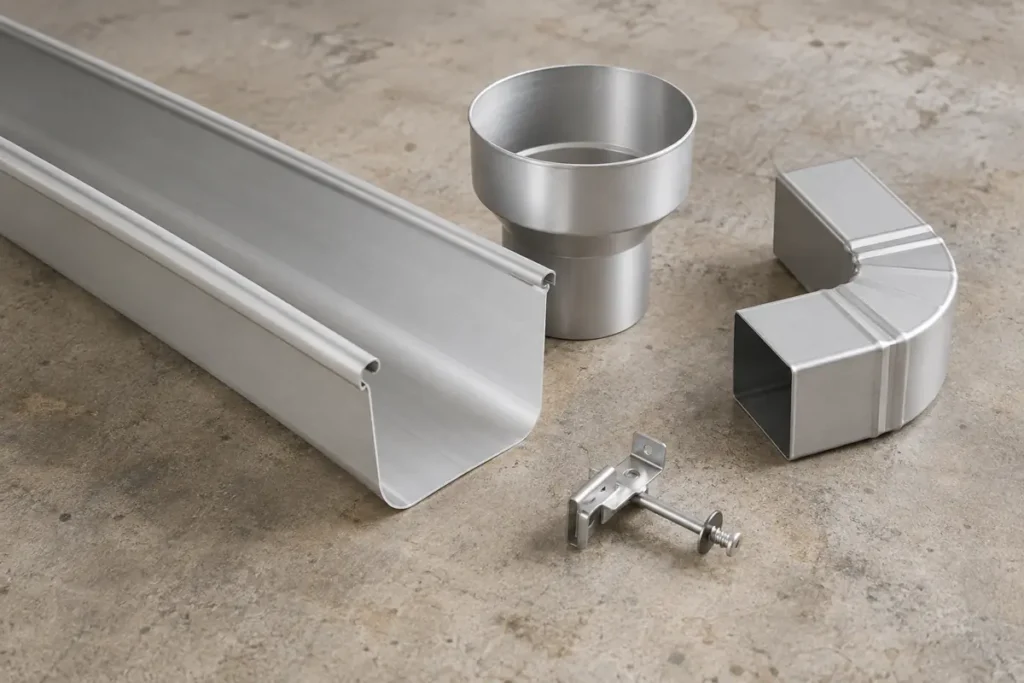
Eavestrough, outlet, elbow and fastening components considered as one system.
Repair, replace, clean or redirect?
Repair is often appropriate for a sound system with one defined failure. Replacement becomes more reasonable when deformation, recurring leaks, unsuitable sizing or widespread fastening problems are present. Cleaning removes debris; it does not correct damaged metal, failed joints or poor slope. Redirecting changes where collected water travels.
Describe when and where the problem appears.
Include a wide roofline photo and a ground-level outlet photo.
Note additions, decks, gates, overhead wires and narrow side yards.
Identify whether the request is isolated or property-wide.
What this site does and does not cover
The service scope is exterior eavestrough, visible downspout and related roof-edge work.
Internal roof drains, buried drainage design, waterproofing, foundation excavation and structural roof repair require the appropriate specialist. When a visible condition suggests another trade, the useful next step is to separate that work from the eavestrough scope.