

Start with the debris above the roof
Large leaves, needles, seeds, blossoms and roof grit behave differently.
A screen that stops large leaves may still admit or hold fine material. Micro-mesh can exclude smaller debris, but surface accumulation and roof granules still need observation. Nearby trees, roof pitch and prevailing wind shape the maintenance pattern.
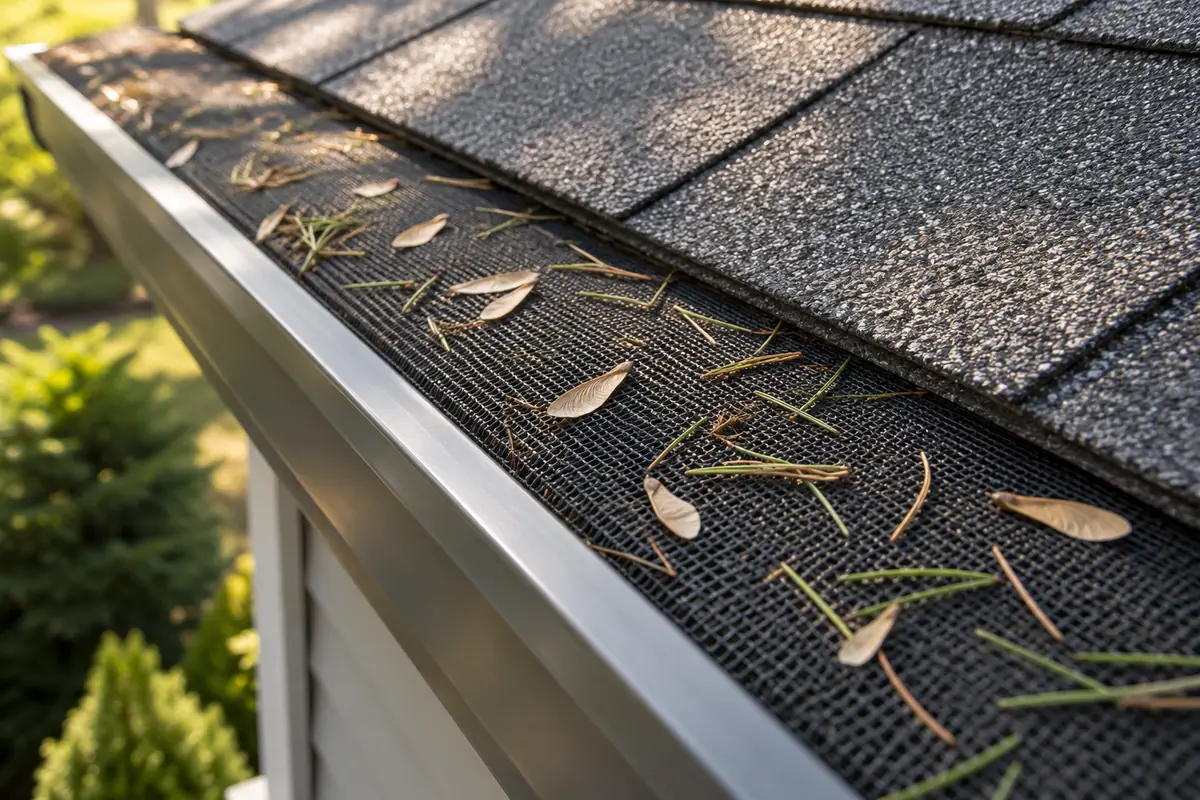
What a guard can and cannot do
| Can help with | Does not eliminate |
|---|---|
| Reducing large debris entry | Surface cleaning and visual checks |
| Keeping troughs more accessible between cleanings | Outlet or downspout restrictions |
| Limiting some nesting material | Ice, snow and roof-water behaviour |
| Matching a planned maintenance strategy | Repair of slope, leaks or damaged fascia |
Roof and eavestrough compatibility
A guard should fit the profile without distorting the trough or relying on inappropriate roof attachment. Shingle condition, roof pitch, drip-edge geometry, trough position and fastener access all matter. Existing slope and outlets should be corrected before they are covered.
Keep outlets serviceable
Leaf protection should not turn a small outlet issue into an inaccessible problem.
Plan how the guard can be inspected or opened where needed. Debris can collect near valley discharge points and at low sections, while a restricted outlet may be hidden below an apparently clean surface.
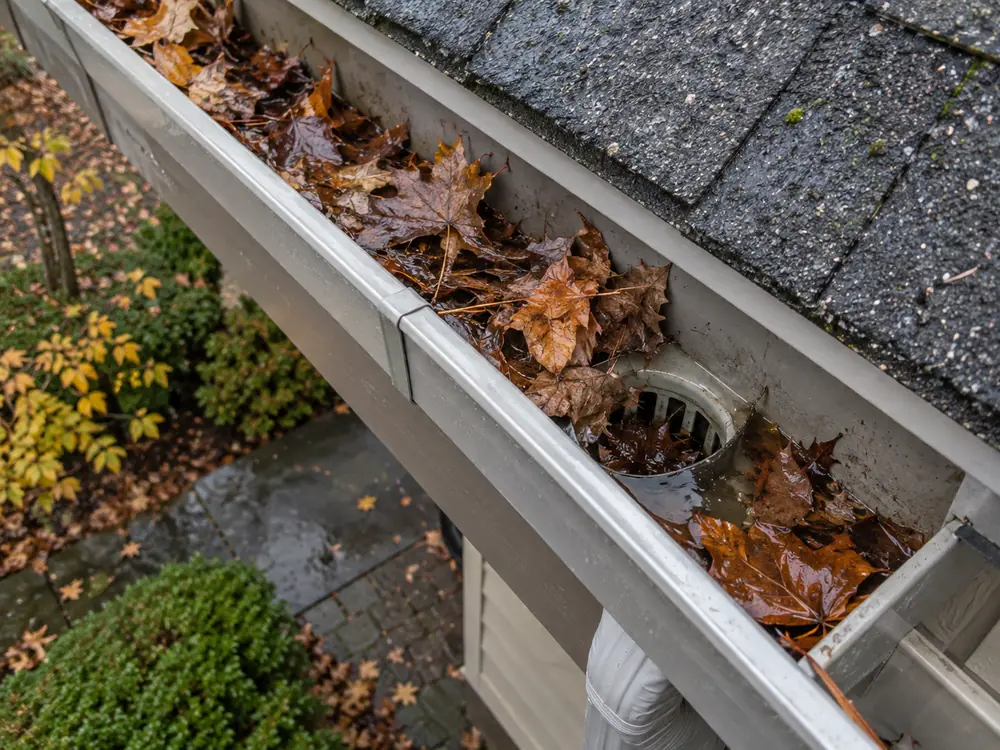
When cleaning alone may be the better choice
A simple roofline with manageable access and limited seasonal debris may not justify guard installation. In other cases, repeated heavy debris or difficult access can make protection useful. Compare the installed approach and future service plan rather than treating guards as a one-time cure.
Questions to ask before installation
- Which debris is the product expected to manage?
- How will valleys and high-flow areas be treated?
- Can outlets and troughs still be inspected?
- Does the installation preserve roof and manufacturer requirements?
- What maintenance remains, and how will it be performed safely?
Compare guards by failure mode—not marketing label
Open screens may shed broad leaves while allowing smaller seeds or needles to enter. Fine mesh can exclude smaller material, yet roof grit and wet organic debris may remain on the surface. Solid-cover approaches depend on water following the intended edge and can behave differently where valleys deliver concentrated flow.
The useful comparison asks what debris reaches the roof, where it accumulates, how the outlet will remain serviceable and how the guard can be removed or opened for future inspection. No style should be described as universally maintenance-free.
Set a realistic winter and maintenance expectation
Snow movement, freeze-thaw cycles and heat loss from the roof can affect any roof-edge system. A guard is not an ice-dam treatment. After installation, watch valley areas, surface buildup and outlet performance from the ground, and keep a safe method for professional access when service is eventually required.
A defined process from observation to closeout
Inspect the existing system
Confirm the trough, slope, outlets and attachment are serviceable.
Identify the debris
Distinguish large leaves, needles, seeds, blossoms and fine roof material.
Review compatibility
Match the guard to the profile, roof edge and future access needs.
Prepare and install
Clean included areas and fit the approved protection without hiding defects.
Set maintenance expectations
Explain surface checks, outlet access and future service.
Useful details for an estimate
Ground-level information helps identify the right property, location, access plan and likely scope before the next conversation.
- Existing gutter profile and condition
- Primary debris type and nearby trees
- Roof valleys and high-flow points
- Number of storeys and access
- Known leaks, overflow or outlet blockages
Safety: Do not climb a ladder to collect photos or measurements.
Questions about this service
Are gutter guards maintenance-free?
No. They can reduce entry into the trough, but surfaces, outlets, roof grit and the system below still need periodic observation and service.
Will guards stop every overflow?
No. Slope, outlet capacity, valley concentration, downspout restrictions and ice can cause overflow even when the trough is protected.
Can guards be added to an older system?
Sometimes, if the trough, fasteners, slope, outlets and fascia are serviceable and the chosen product fits the roof-edge geometry.
Is micro-mesh always the right guard?
Not automatically. Fine exclusion, water entry, surface loading, service access and the debris type must be balanced.
What should be fixed before guards are installed?
Leaks, sag, loose attachment, poor slope, outlet restrictions and unsuitable downspout routing should be addressed before the trough is covered.