
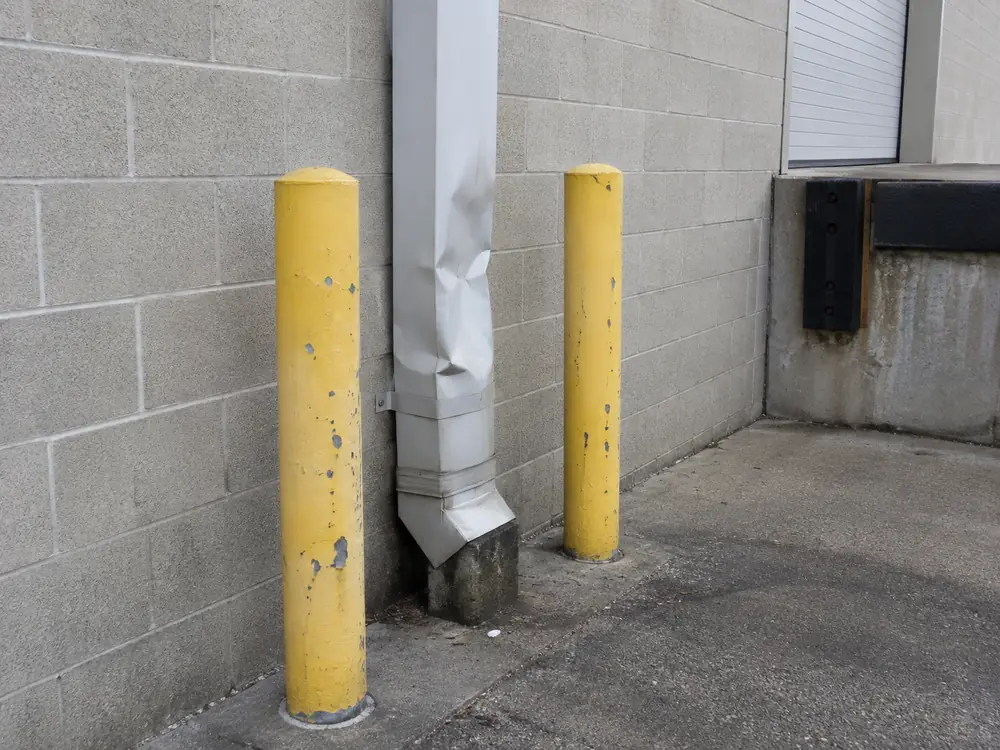
Commercial conditions that may be repairable
- One leaking corner, end cap or outlet connection
- A limited number of loose hangers on sound support
- A short dented or separated gutter section
- An impact-damaged downspout or elbow
- A failed wall strap or exposed connection
- Localized overflow linked to one restricted outlet
Record the exact location before scoping
“Building B, west elevation, above unit 14” is actionable; “the gutters leak” is not.
Consistent location labels help match photographs, estimates, approvals and completion notes. For repeat architecture, include a wide image that distinguishes the building plus a close view of the condition.
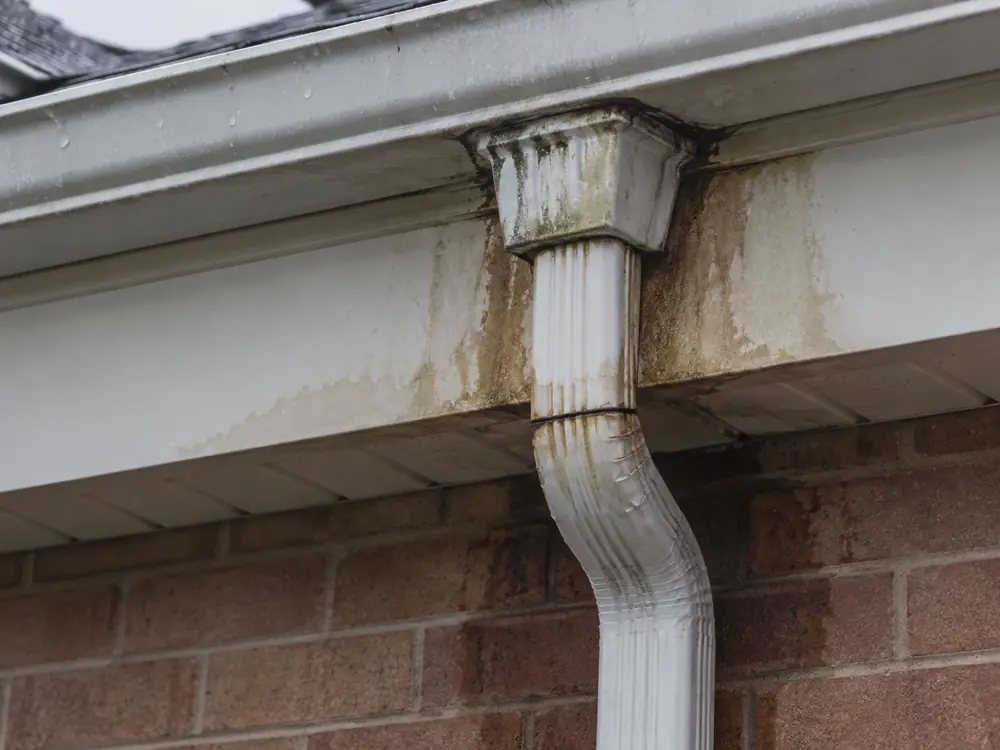
Separate priority from final repair choice
| Observation | Immediate direction | Long-term question |
|---|---|---|
| Loose component above an entrance | Control access and assess promptly | Can the affected run be repaired safely? |
| Crushed leader beside loading zone | Replace damaged exposed section | Is impact protection or rerouting needed? |
| One leaking joint | Inspect and prepare a targeted repair | Is surrounding material still sound? |
| Many failures on one elevation | Assess the full elevation | Would replacement outperform repeated patches? |
A durable repair considers cause and context
Adding sealant or fasteners without checking movement, contamination, deformation or fascia support can create a short-lived result. The visible water path, connected outlet and repair history help establish whether the fault is truly isolated.
Plan access around operations
- Nearest public door, unit or loading bay
- Vehicle and delivery schedules
- Height and equipment placement
- Temporary pedestrian routing
- On-site contact and lock or gate access
- Photo or written closeout expectations
Know when another trade is involved
Water at a roof edge may involve flashing, roofing, membranes, masonry or concealed drainage. Structural support, internal drains and underground systems are outside a standard exterior repair unless expressly included through the appropriate qualified trade.
Distinguish temporary control from permanent repair
Keeping people away from a loose component or managing water at an entrance may be an immediate site action; it is not automatically the final repair. The permanent scope still needs suitable access, sound adjacent material and a defined correction. Property records should not mark a location complete when only temporary control was provided.
Use repair history to find repeat failures
If the same corner, outlet or short run appears in several work orders, compare preparation, movement, slope, upstream flow and support instead of repeating the same patch. A location-based history can justify a broader elevation review while other isolated repairs remain appropriately small.
Write the repair so approval and closeout describe the same location
The estimate line, work order, technician photograph and invoice should use the same building and elevation name. Note whether the approved work is a joint preparation, outlet replacement, refastening, short-section integration or downspout correction. Clear wording prevents a completed local repair from being mistaken for a warranty on the entire surrounding system.
A defined process from observation to closeout
Identify the location
Use the building, elevation, entrance or unit reference used by the property team.
Inspect the failure
Review joints, attachment, outlet, downspout, support and the visible water path.
Define the smallest coherent repair
Include the connected components necessary for a durable result.
Coordinate access
Set the work zone around tenants, customers, vehicles and equipment.
Record completion
Note the repaired location and any condition left for future planning.
Useful details for an estimate
Ground-level information helps identify the right property, location, access plan and likely scope before the next conversation.
- Building and elevation identifier
- Safe wide and close photographs
- When the failure appears and how often
- Operational or pedestrian impact
- Previous repair history and access restrictions
Safety: Do not climb a ladder to collect photos or measurements.
Questions about this service
Can one commercial gutter section be repaired?
Often, when a compatible repair can be integrated and the adjacent material, fascia and drainage layout remain serviceable.
Can a downspout damaged by a vehicle be replaced?
Yes. Repeated impact risk, rerouting and possible protective measures should also be considered.
Can work be completed above an occupied entrance?
The scope must include a controlled work zone and suitable access. Scheduling depends on the site and approved work.
When should the full run be replaced?
Widespread distortion, repeated leaks, failed attachment or incompatible material can make replacement more practical than another isolated patch.
Can completion photos be supplied?
They can be included when the required locations, naming method and level of documentation are agreed before the work.