
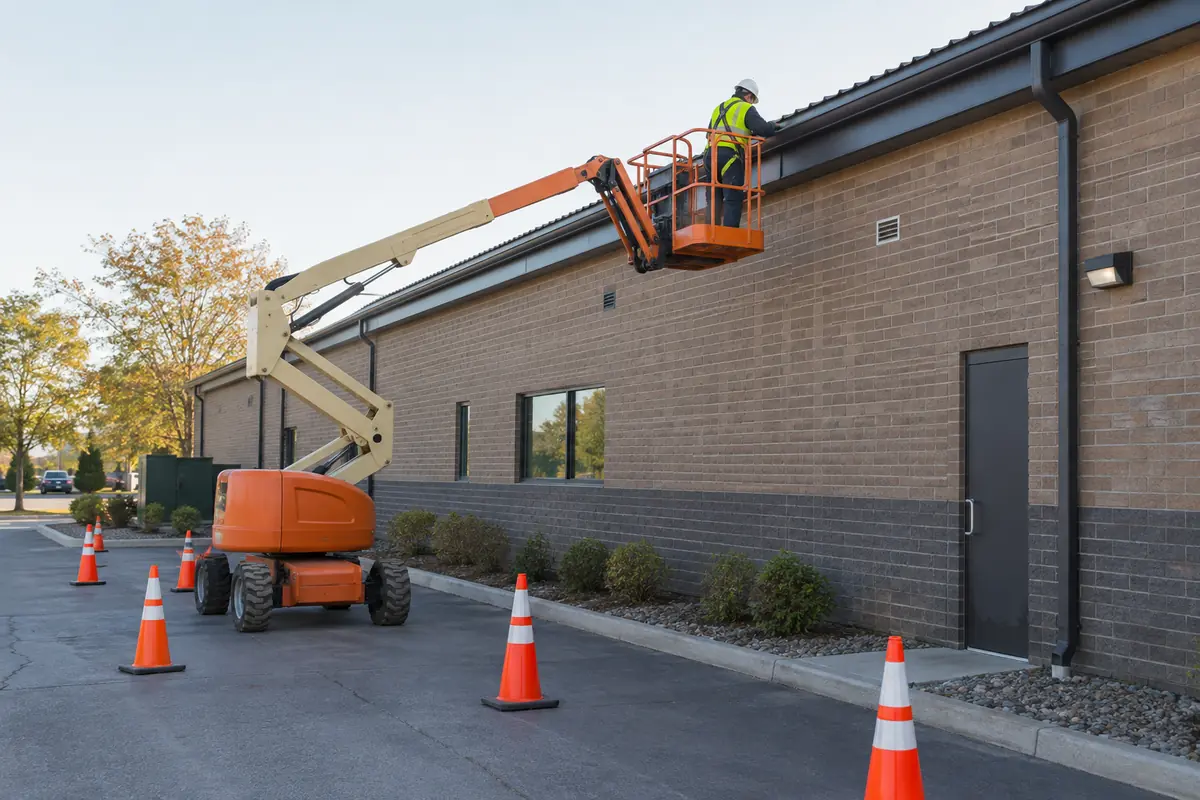
What a defined commercial cleaning scope includes
- Named buildings and elevations
- Loose debris removal from accessible included runs
- Outlet openings and accessible leader flow checks
- Debris handling and work-area cleanup
- Visible condition notes for leaks, sag or damage
- Agreed photographs or location report when required
Prioritize by debris and consequence
A rear elevation beneath mature trees may collect more debris than an open front roofline. An outlet above a main entrance may deserve closer monitoring because failure affects occupants. A useful program focuses effort where probability and consequence are highest.
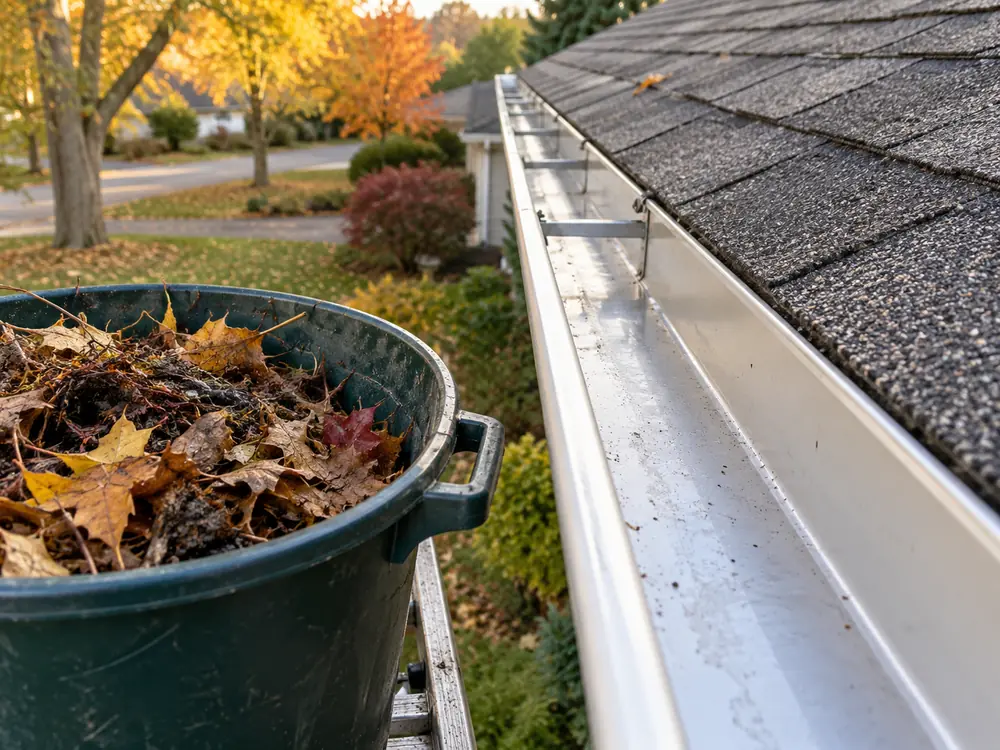
Choose a schedule from site evidence
| Site pattern | Planning response | Record to keep |
|---|---|---|
| Heavy autumn leaf load | Plan after primary leaf drop and monitor outlets | Date, elevations and debris level |
| Seeds or blossoms in spring | Add a targeted seasonal visit if restrictions recur | Affected species and locations |
| Open roofline with little debris | Use condition-based inspection | Observed outlet flow and exceptions |
| Known valley or low-point issue | Inspect that location each visit | Photos and change over time |
Cleaning is not repair
A clear trough can still leak, sag or overflow.
Failed joints, distorted material, poor slope, loose attachment and inadequate outlets require a separate repair or replacement scope. Maintenance reporting should identify these conditions without quietly expanding the approved work.
Access and property operations matter
Lift routes, parked vehicles, deliveries, customer entrances, locked yards and tenant notice can determine when maintenance is possible. A recurring program should record these constraints so each visit does not restart from zero.
Use records that support future decisions
Location-based photos, debris observations and repair recommendations can reveal repeated restrictions and help distinguish operating maintenance from a capital project. Reporting format and detail should be agreed before service rather than assumed.
Define service levels for accessible and inaccessible areas
A program should identify elevations that can be reached with planned equipment and any roof edge, enclosed courtyard or high section that requires a different method. Recording inaccessible areas prevents a maintenance report from implying that the entire property was cleared when the approved scope was narrower.
Escalate conditions without turning maintenance into an open-ended repair order
The technician can record a loose run, failed outlet or damaged leader and describe its location. The property team can then approve a separate repair using that evidence. This keeps invoices reviewable and prevents unplanned work from bypassing the normal authorization path.
Plan debris handling and weather limits
The scope should state how removed debris is contained and whether site bins or off-site disposal are assumed. Wet, frozen or wind-exposed conditions can change safe access and the ability to verify flow. A recurring schedule needs a rescheduling process instead of pressuring work to proceed in unsuitable conditions.
A defined process from observation to closeout
Confirm the asset list
Identify included buildings, elevations and known priority points.
Plan safe access
Coordinate lifts, parking, work zones and occupants.
Clear runs and outlets
Remove included loose debris and check accessible flow paths.
Record exceptions
Identify visible damage, sag, leaks or inaccessible areas.
Set the next interval
Adjust timing from actual debris and restriction history.
Useful details for an estimate
Ground-level information helps identify the right property, location, access plan and likely scope before the next conversation.
- Building and elevation inventory
- Approximate heights and roof-edge access
- Tree cover and known debris seasons
- Previous cleaning dates and recurring locations
- Required photos, reports and preferred service window
Safety: Do not climb a ladder to collect photos or measurements.
Questions about this service
How often should commercial gutters be cleaned?
Frequency depends on debris, roof geometry, known restrictions and consequence. A site history is more useful than assuming every elevation needs identical timing.
Are downspouts included?
The scope should name outlet and accessible flow checks. Full blockage removal or concealed drainage may require separate work.
Can maintenance be scheduled across several buildings?
Yes. Buildings can be grouped by location, access and priority, with a repeatable list for future visits.
Does cleaning include repairs?
Not unless repairs are specifically approved. Visible failures can be recorded for a separate scope.
Can before-and-after photos be requested?
Yes, when the locations, naming convention and expected detail are agreed as part of the maintenance program.