

What cleaning should address
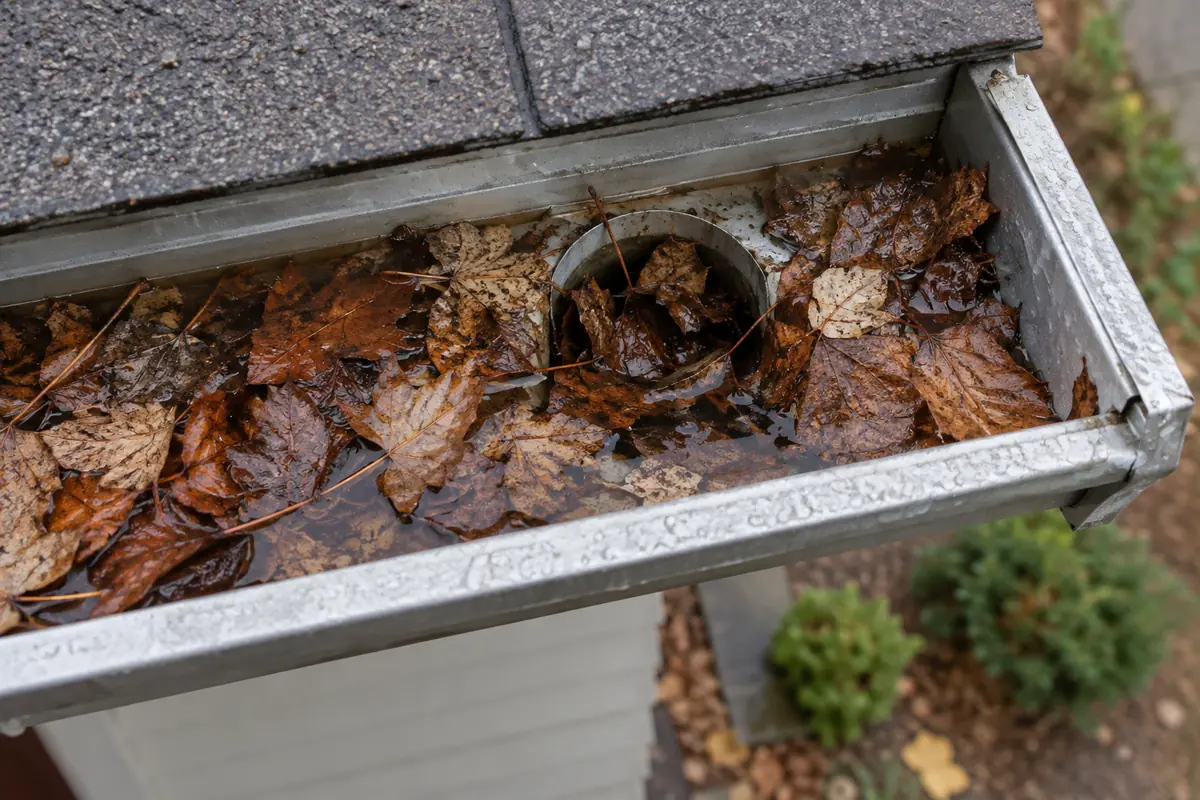
- Loose leaves, needles, seed pods and roof granules in the trough.
- Material collected around outlets and upper elbows.
- Accessible guard surfaces or removable service points where included.
- Visible debris cleanup around the work area.
- Ground-level observation of extensions and discharge points.
Cleaning is not the same as repair
A clear trough can still leak, sag or overflow.
Failed corner seals, loose hangers, deformed metal, incorrect slope, inadequate outlet capacity and deteriorated fascia require a repair or replacement decision. Documenting these conditions during maintenance makes the next scope clearer.
How often should eavestroughs be cleaned?
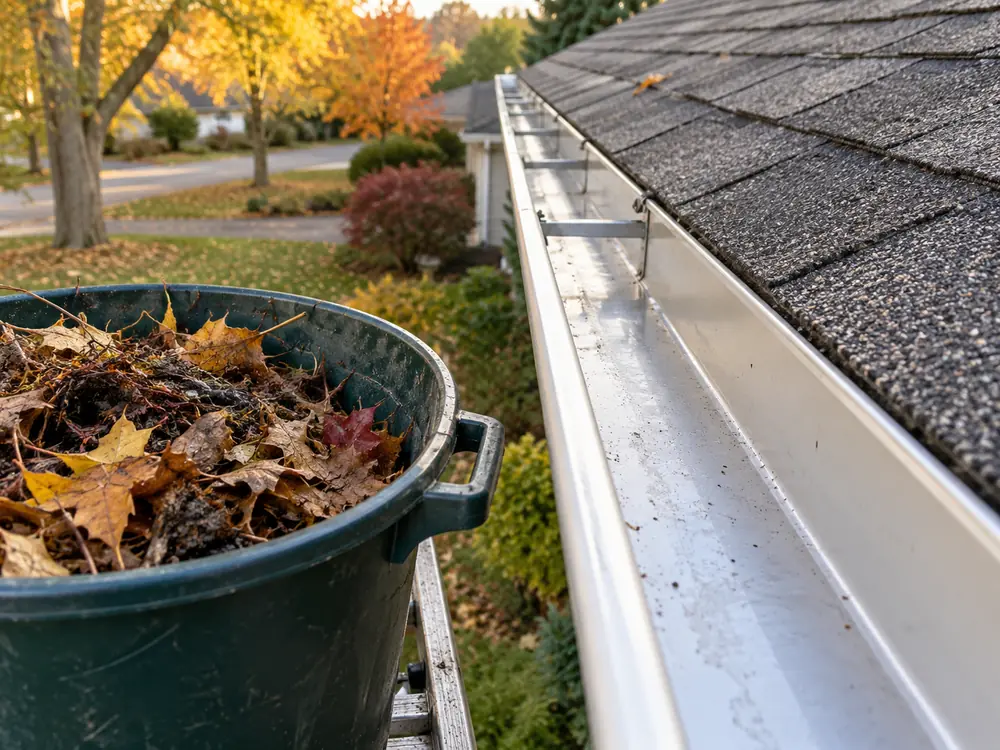
There is no universal schedule. Nearby trees, debris type, roof pitch, guard design, valley concentration and past blockages all matter. A property below heavy deciduous or conifer cover may need more frequent attention than an exposed roofline.
| Condition | Planning implication |
|---|---|
| Large deciduous canopy | Check after major leaf drop and after severe storms. |
| Needles or fine seed debris | Inspect surfaces and outlets because material can bridge small openings. |
| No nearby trees | Roof grit, nests and windblown debris can still collect. |
| Gutter guards installed | Plan surface and outlet access rather than assuming no maintenance. |
Ground-level checks between service visits
- Look for plant growth or visible debris above the front edge.
- Check for staining at corners, end caps and outlets.
- Watch from a safe location for overflow during rain.
- Confirm lower extensions remain connected and point to the intended area.
- Never climb in unsafe weather or work near overhead electrical hazards.
Seasonal context in Mississauga
Autumn leaf fall and spring thaw are natural review points, but extreme wind and rain can change the schedule. Winter ice may conceal rather than resolve restrictions. See the seasonal maintenance checklist for a simple ground-level sequence.
When to request a repair review
Move beyond cleaning when overflow continues after debris is cleared, a run remains uneven, fasteners pull away, water escapes at joints, the outlet or downspout is damaged, or discharge continues to collect beside the building.
Build frequency from the property’s debris cycle
“Twice a year” is a common starting point, not a rule for every home. Maple seeds, blossoms, pine needles, broad leaves and shingle granules arrive at different times. Roof valleys and low sections can create a restriction before the rest of the system looks full.
Record what was removed, which outlets were restricted and whether guards or upper roofs changed access. That history helps move from an arbitrary calendar to a schedule that reflects the actual property.
Keep elevated work within a safe scope
Ground-level observation is useful for planning, but cleaning and close inspection at height require suitable equipment, conditions and training. Avoid leaning ladders on the trough or working near overhead electrical hazards. The service request should mention narrow passages, decks, slopes and other access limits before scheduling.
A defined process from observation to closeout
Confirm included elevations
Identify access, guards, tree exposure and known trouble points.
Remove loose debris
Clear included trough sections and outlet openings with suitable access.
Check accessible flow
Review outlets and accessible downspout paths rather than only the trough surface.
Record visible defects
Separate leaks, sag, loose components and damage from the cleaning scope.
Plan the next check
Use actual debris and restriction history to set timing.
Useful details for an estimate
Ground-level information helps identify the right property, location, access plan and likely scope before the next conversation.
- Home height and access
- Tree cover and debris type
- Guard type if present
- Last known cleaning
- Recurring overflow or blocked outlet locations
Safety: Do not climb a ladder to collect photos or measurements.
Questions about this service
Are downspouts included in cleaning?
The scope should say whether accessible outlets and downspouts are checked or cleared. A fully obstructed or damaged concealed section may require separate work.
Do guards eliminate cleaning?
No. Surface debris, fine particles, roof grit and outlets still need inspection and sometimes service.
Can cleaning fix overflow?
It can when debris is the cause. Continued overflow points to slope, outlet, downspout, valley-flow or capacity conditions.
Is spring or fall better?
The useful timing depends on the property. Many tree-covered sites benefit from checks after leaf drop and again around spring thaw or heavy-rain season.
What if the gutter still overflows after cleaning?
Slope, deformation, valley concentration, outlet size, downspout flow and system capacity should then be reviewed.