
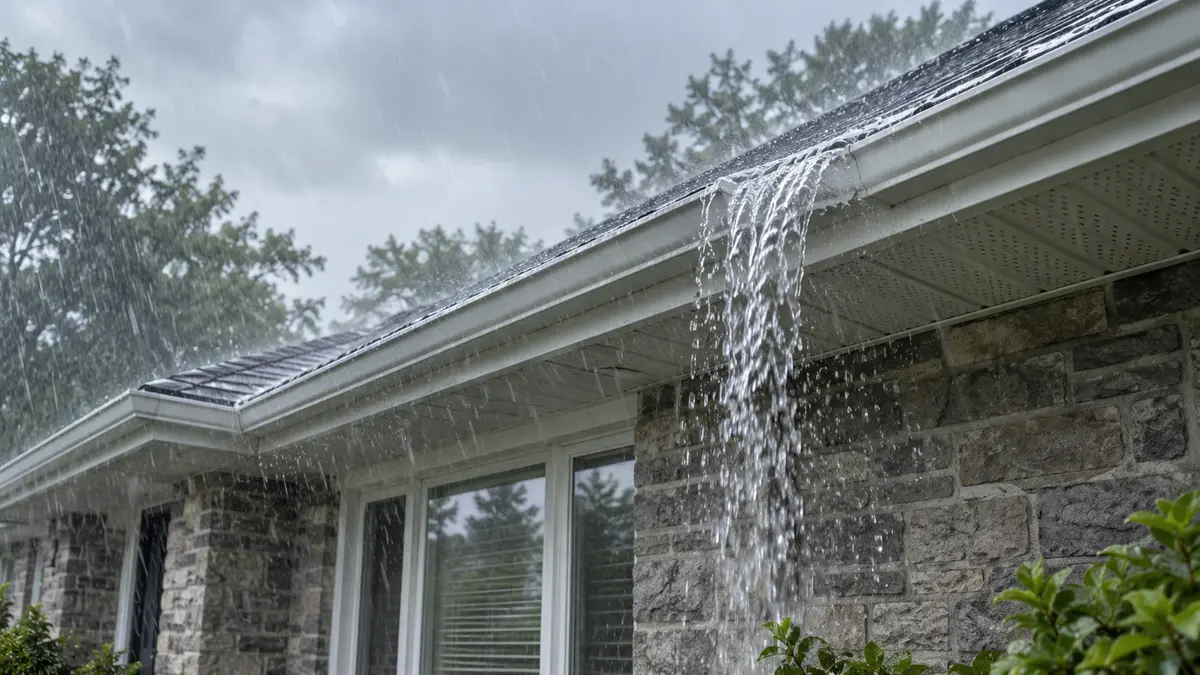
First, observe where the water crosses the edge
The spill location is one of the best non-invasive clues.
Overflow directly above an outlet suggests a different group of causes than overflow at the far end of a long run. A spill below a valley points to concentrated inflow. Record whether the event begins in light rain, only in intense rain or during a freeze-thaw cycle.
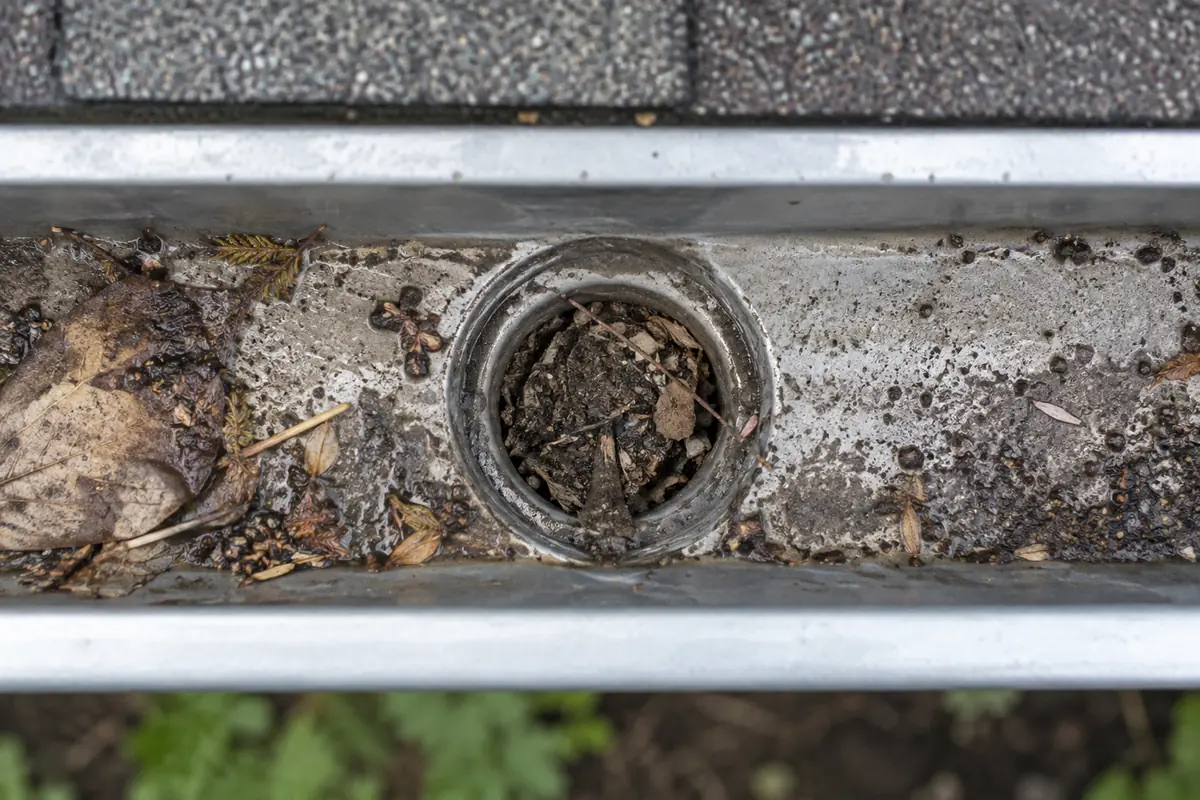
1. Debris can hide at the outlet
The open trough may look clean from the ground while a compact plug remains at the outlet, in the first elbow or behind a guard. Small openings catch leaves and seed clusters. Water then rises locally and spills near the downspout.
2. Poor slope or a sag leaves a low section
A run that has moved between hangers can hold standing water. New rain consumes the remaining volume before water reaches the outlet. Causes may include loose fasteners, insufficient support, fascia deterioration, deformation or an incorrect original slope.
3. A roof valley concentrates flow
Valleys combine water from adjacent roof planes and deliver it to one short area. In heavy rain, the water can overshoot, surge over the front edge or expose an undersized local outlet layout. The corrective detail depends on roof geometry and should not simply redirect water under roofing materials.
4. The outlet and downspout cannot remove water quickly enough
Trough capacity and discharge capacity are not the same. A small outlet, several tight offsets, a dented elbow or an undersized downspout can become the bottleneck. A second outlet or revised route may help a long run, but only after restrictions and slope are assessed.
5. One run receives more roof area than expected
Upper roofs, dormers and additions can direct water to a lower section. The visible length of trough is not a reliable measure of contributing area. When replacement is planned, map which roof planes feed each elevation before choosing profile size and downspout quantity.
6. Ice interrupts the route
Frozen debris, ice in a downspout and roof-edge ice can block or redirect snowmelt. Winter overflow can also indicate building heat or roof-assembly conditions that are outside normal eavestrough repair. Do not climb or strike frozen components; wait for safe conditions and involve the appropriate professional.
7. Discharge at the ground causes a second problem
Even after water leaves the downspout, a missing extension or unsuitable grade can create pooling beside the wall or ice across a walkway. Follow the route to its visible end. The surface-discharge guide explains the property factors to review.
Choose the next action by evidence
| Observation | Likely next scope |
|---|---|
| Visible debris and otherwise aligned system | Cleaning and outlet check |
| Leak, sag or loose localized section | Repair review |
| Long runs or recurring capacity issue | Layout and sizing review |
| Water ends beside wall or walkway | Downspout routing review |
Compare the first minute with the sustained storm
Overflow that begins almost immediately below a valley can point to concentrated arrival or overshoot. A run that performs at first and spills after several minutes may be filling behind a restriction or low point. The timing does not prove the cause, but it narrows what should be inspected.
Record whether the nearest downspout has begun discharging and whether the spill stops quickly when rainfall eases. Those observations are more useful than describing every event simply as “heavy rain.”
Do not treat a splash detail as a universal cure
A deflector may control one concentrated location, but it can also trap debris or alter winter behaviour. The roof valley, trough position, outlet distance and maintenance access should be reviewed before adding a detail that could conceal the actual bottleneck.
Questions about this service
Can eavestroughs overflow without leaves?
Yes. Slope, valleys, outlets, downspouts, roof area, deformation and ice can cause overflow without an open-trough blockage.
Why does overflow happen only in heavy rain?
The system may handle low flow but reach a local capacity limit at a valley, outlet, long run or restricted downspout.
Should splash guards be added below every valley?
No. A detail that controls splash in one layout can create debris or winter issues in another. The roof edge and outlet arrangement should be reviewed together.
Will cleaning fix standing water?
Only when debris causes it. Persistent pooling after cleaning points to slope, sag, deformation or outlet elevation.
What should I record during the next storm?
From a safe ground-level position, record the first spill location, nearby valley, outlet flow, downspout discharge and how long the rain had been falling.