
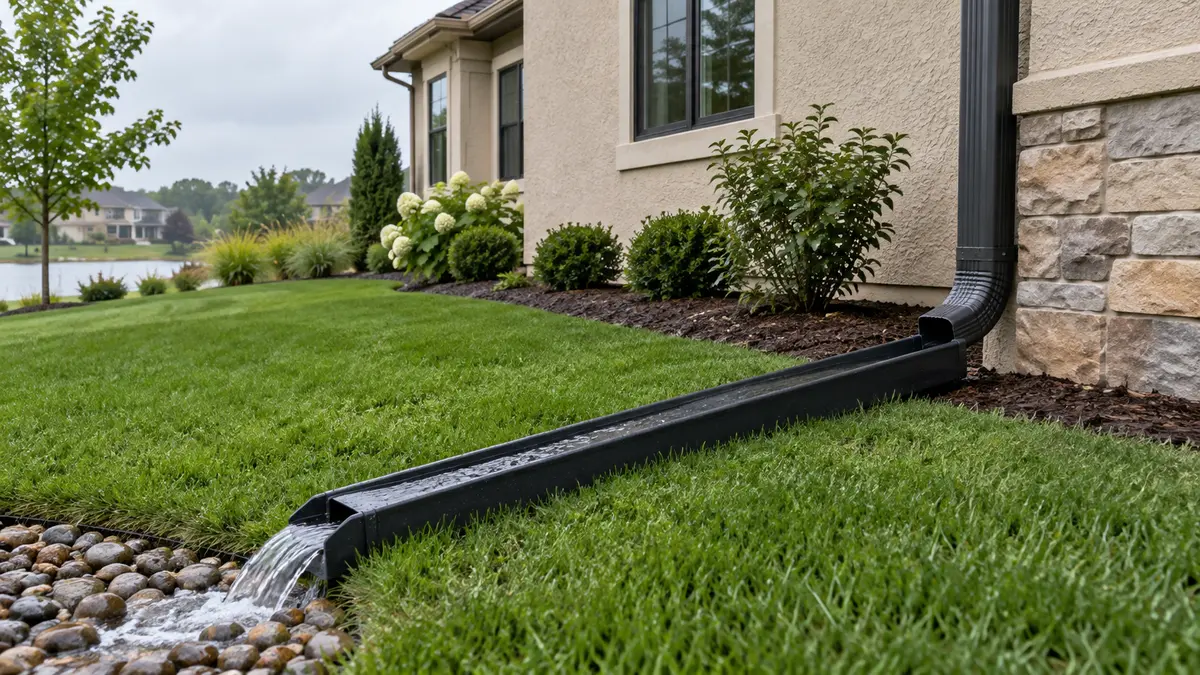
Trace the route from outlet to surface
The lower extension is only the final piece. Start at the trough outlet, follow upper elbows and offsets, note the vertical downspout and inspect every joint to the termination. A restriction above can mimic a poor ground route, while a perfect upper system can still leave water beside the wall.
Look at grade, not only distance
Distance from the wall is useful only when the receiving surface continues to move water in a suitable direction.
A long extension that ends in a depression can return water toward the building. A shorter route on a clearly sloped, stable surface may behave differently. Soil type, gardens, swales, retaining conditions and neighbouring grades all affect what happens next.
Keep walkways and occupied areas usable
An extension should not create a trip hazard or release water where winter icing affects steps, gates or sidewalks. Hinged or removable sections may help access but must be returned to the operating position. High-traffic commercial and multi-unit areas need specific coordination.
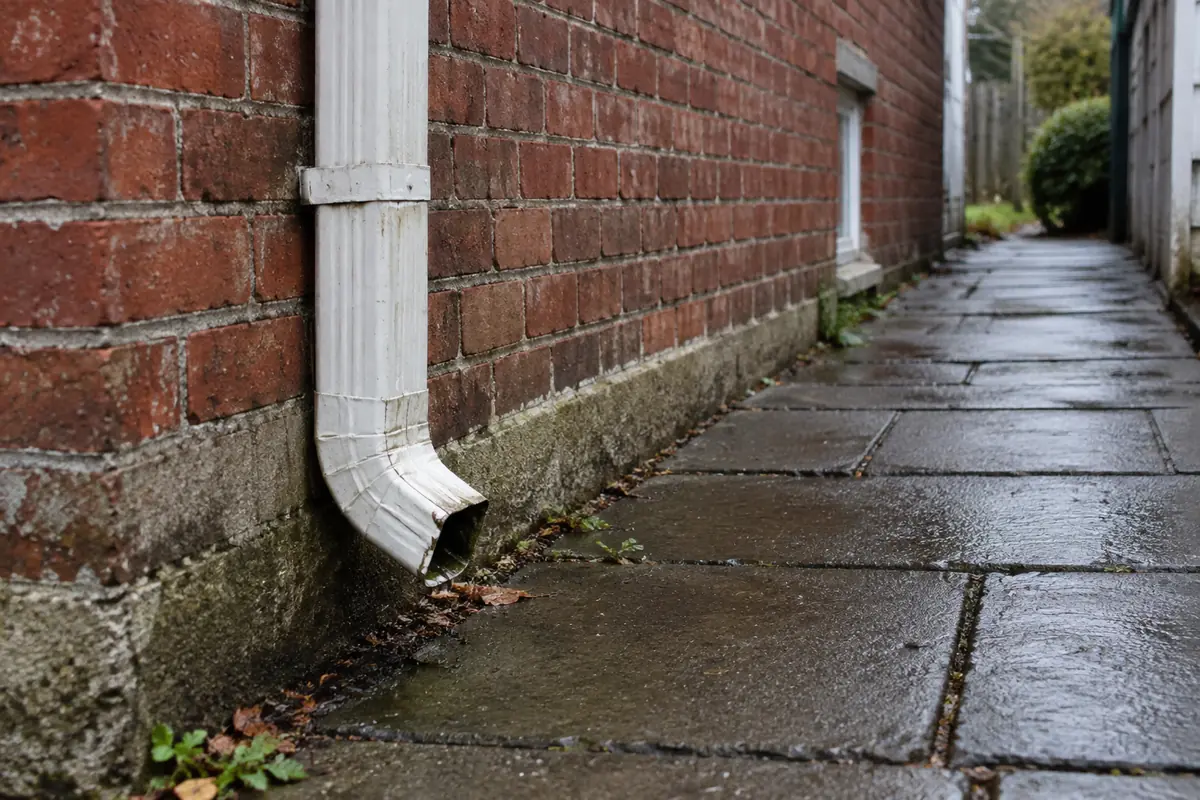
Respect property boundaries and nearby surfaces
Do not deliberately direct roof water onto an adjacent property. Narrow side yards require careful review of walls, fences, shared access and available surface slope. A route that simply transfers the problem to a neighbour is not a complete solution.
Rain barrels need an overflow plan
A barrel intercepts a limited volume and becomes full. Its overflow should be screened, stable and routed to an appropriate surface location. The base must support the weight of stored water, and winter operation should follow the barrel and diverter instructions.
Older connected systems require caution
A downspout entering the ground does not prove the buried line is clear, connected or currently permitted. Do not disconnect or alter an older system solely from assumptions. Confirm current municipal guidance and obtain specialist help when buried drainage must be investigated.
Verify current municipal information
Programs, rebates, bylaws and technical guidance can change.
Use the official City stormwater and your home guidance for current downspout, grading, rain-barrel and property-drainage information. For non-residential and multi-residential properties, check the separate stormwater charge credit program and its technical requirements. This website is not affiliated with the City and does not replace site-specific municipal direction.
Prepare a routing request
- Show the entire wall from outlet to ground.
- Photograph the termination and surrounding grade from several angles.
- Mark walkways, gates, gardens and property edges.
- Note whether water pools, ices or returns toward the building.
- Identify any rain barrel or older underground connection.
- Describe changes planned to patios, landscaping or grading.
Distinguish a visible extension from drainage design
An above-ground extension directs water across the visible surface. It does not redesign the lot grade, verify a buried pipe, repair foundation drainage or confirm the capacity of a municipal connection. If the receiving area remains wet or sends water back toward a structure, the property may need a broader drainage assessment.
Recheck the route after landscaping or paving changes
A new patio, walkway, garden edge or raised soil bed can change a route that once worked. Photograph the current surface and note planned changes before selecting the termination. The extension should remain serviceable and should not depend on water crossing an occupied hard surface.
Questions about this service
How far should a disconnected downspout extend?
Current City guidance says that, where possible, extend it at least 1 metre (3 feet) from foundations and other structures with basements to a safe lawn or garden location. The surface route must still avoid hazards and neighbouring property.
Can a downspout discharge onto a driveway?
That can create surface flow or winter ice and should be assessed against the property layout and current local requirements.
Should I disconnect a downspout that enters the ground?
Do not assume. Verify the connection and current City guidance, then plan a suitable above-ground route before altering it.
Does a rain barrel replace an extension?
No. The barrel needs a safe overflow route for full conditions and may be bypassed or managed seasonally.
Should current City guidance be checked before changing the route?
Yes. Municipal guidance and property conditions can change, especially where older underground connections or more complex drainage work are involved.